Denial of Service (DoS)
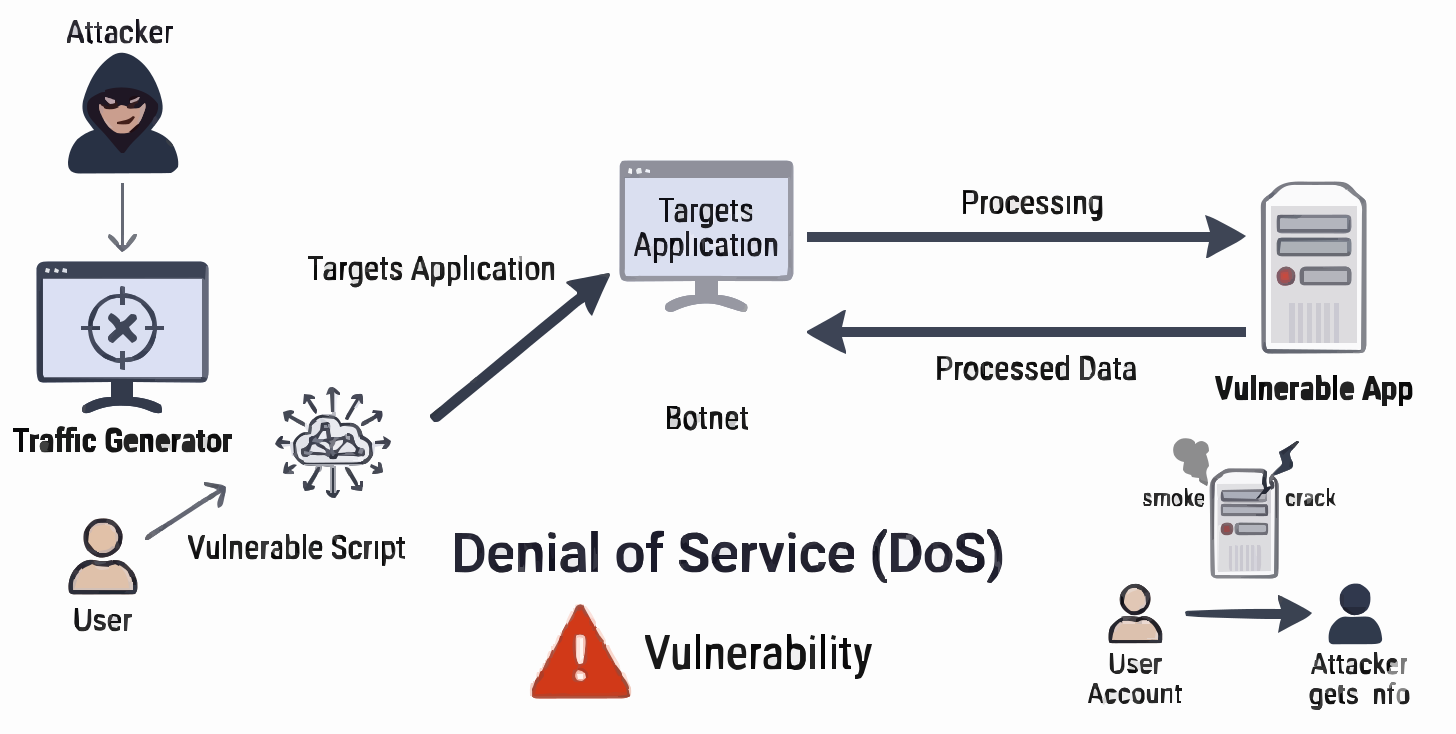
What is it?
Denial of Service (DoS) occurs when an API is overwhelmed with excessive or resource-intensive requests, causing degradation or complete unavailability of the service.
Unlike traditional network-layer DoS attacks, API-level DoS focuses on exploiting application logic, expensive operations, and resource consumption patterns to exhaust backend systems such as CPU, memory, database connections, or third-party dependencies.
APIs are especially vulnerable due to their exposure to untrusted clients and their reliance on backend processing for each request.
What are specific examples?
- High-frequency request flooding without throttling
- Expensive database queries triggered repeatedly
- Large payload submissions consuming memory
- Deeply nested JSON causing parsing overhead
- Repeated invocation of resource-heavy endpoints (e.g., search, analytics)
- Lack of timeouts leading to connection exhaustion
- Chained requests amplifying backend load
Test case FAQs
When is this test case applicable?
- Public-facing APIs or endpoints exposed to untrusted users
- Endpoints performing resource-intensive operations
- APIs interacting with databases, search engines, or external services
- Critical business flows where availability is essential
How does it work?
Prerequisites
- Identification of high-cost or critical endpoints
- Baseline performance metrics (latency, throughput)
- Ability to generate controlled request load
Test sequence
- Establish baseline response metrics under normal conditions
- Gradually increase request volume to simulate load
- Send payloads designed to increase processing cost:
- Large request bodies
- Complex query parameters
- Deeply nested structures
- Trigger repeated execution of expensive operations
- Monitor system behavior:
- Response time degradation
- Error rates (
5xx, timeouts) - Resource utilization (CPU, memory)
- Identify thresholds where service degradation begins
Success/Failure indications
-
Failure (vulnerable):
- Significant latency increase under moderate load
- API becomes unresponsive or returns
5xxerrors - Resource exhaustion (CPU spikes, memory leaks)
- Lack of protective mechanisms (throttling, timeouts)
-
Success (secure):
- Graceful degradation under load
- Requests are throttled or limited appropriately
- Stable response times within defined thresholds
- No uncontrolled resource exhaustion
What is the solution?
- Implement rate limiting and throttling mechanisms
- Enforce request size and complexity limits
- Optimize expensive operations (queries, processing logic)
- Use timeouts and circuit breakers for backend services
- Apply caching for frequently accessed data
- Isolate critical services and apply resource quotas
- Continuously monitor and test API performance under load
References
Was this page helpful?